Social media can attract interest, but leads are lost when a post, landing page, form, and booking tool feel like separate experiences. For small businesses, the goal is not simply to earn clicks. It is to make the next step clear, easy to complete, and consistent with the promise that brought someone in.
That means treating social content and your website as one customer journey. When every handoff works, interested people can move from a post to a useful conversation without having to figure out what to do next.
Key takeaways for turning social interest into leads
- Match the landing page to the specific offer in the social post.
- Make the primary call to action obvious on mobile.
- Ask for only the information your team needs to respond.
- Test every link, form, confirmation, and scheduling step.
- Measure qualified inquiries and booked calls, not engagement alone.
Lead capture works best as one connected journey
Effective social media lead generation connects each step from discovery to follow-up. A post earns attention, a relevant page explains the offer, and a simple action captures the inquiry or schedules a conversation.
For example, a Las Vegas home remodeling company could share a short video about planning a kitchen update. The post invites homeowners to request an estimate. Its link should open a page about that estimate, explain the service area, and provide a short form or booking option. Sending the visitor to a general homepage makes them search for information they expected to find already.
Keep the language and promise consistent across the handoff. If the post offers a project estimate, the page should not lead with a different service or a vague “Contact us” message. A clear path builds confidence because people can see what will happen after they click.
Four handoff problems that quietly cost you inquiries
Lead loss often happens after someone shows interest. Review the full path instead of assuming a weak post is the only problem.
- The link goes to the wrong place: A bio link or homepage makes visitors hunt for the offer they just saw.
- The page changes the promise: Different wording, pricing, or service details can create doubt.
- The form asks too much: Unnecessary questions add work before a prospect has spoken with your team.
- The next step is unclear: A visitor submits details but gets no confirmation, response expectation, or scheduling option.
Check the journey on a phone, not just a desktop. Social visitors commonly tap through on mobile, so small buttons, slow-loading pages, hard-to-read text, or a form that is awkward to complete can interrupt the experience.
Give every post one clear destination
A focused campaign is easier to understand and improve when each post points to one relevant next step. Use a dedicated page when the offer needs explanation, qualification, or scheduling. Use a native social form or direct message when a shorter conversation is the better fit.
| Journey step | What the visitor needs | What your business should check |
|---|---|---|
| Social post | A relevant reason to act | Does the call to action name one next step? |
| Landing page | Details that match the post | Is the offer and service area easy to understand? |
| Form or message | A quick way to share interest | Are every field and question necessary? |
| Booking or follow-up | A clear expectation of what happens next | Does the confirmation explain timing and next steps? |
For a local business, the page should answer practical questions before asking for contact details: what the service includes, who it is for, where it is available, and what happens after someone reaches out. Keep the main action visible without forcing visitors to scroll through unrelated material.
Keep forms short without sacrificing lead quality
Ask for the few details your team needs to make a useful first response. A contractor might need a name, preferred contact method, ZIP code, and a brief description of the project. A strategy call may require a name, business email, and the service the prospect wants to discuss.
Extra fields can help qualify an inquiry, but include them only when the answer changes how your team responds. If a question is better handled in an initial conversation, leave it off the form. Tell people what to expect after they submit, and show a confirmation that offers a realistic next step, such as choosing an available time.
Native social forms can reduce the steps needed to express interest. A website page can be a better fit when someone needs more context before deciding. Neither route is automatically best. Compare the quality of inquiries and how often they become conversations or appointments.
Measure the path from click to booked conversation
Likes and views show whether content attracted attention, but they do not tell you where potential customers dropped off. Track a few stages so you can identify what to improve:
- Link clicks: Did the post persuade people to take the next step?
- Completed inquiries: Did visitors finish the form or message the business?
- Qualified leads: Do inquiries match your service, location, and customer needs?
- Booked conversations: Did a qualified lead schedule or agree to speak?
Compare each stage over the same period and for the same campaign. If clicks are strong but inquiries are scarce, inspect the page and form. If many people inquire but few book, review response timing, qualification, and the booking experience. These are diagnostic signals, not a reason to change several parts of the funnel at once.
Audit the full journey before increasing promotion
Before putting more effort or budget behind a campaign, complete the path as if you were a prospective customer. This simple audit can reveal broken links, confusing copy, and missing confirmations.
- Open the social post and tap its call to action on a phone.
- Check that the destination matches the offer and makes the next step clear.
- Complete the form or message flow and note any confusing or unnecessary questions.
- Confirm the submission arrives with the right person or system.
- Check the confirmation, scheduling option, and follow-up experience.
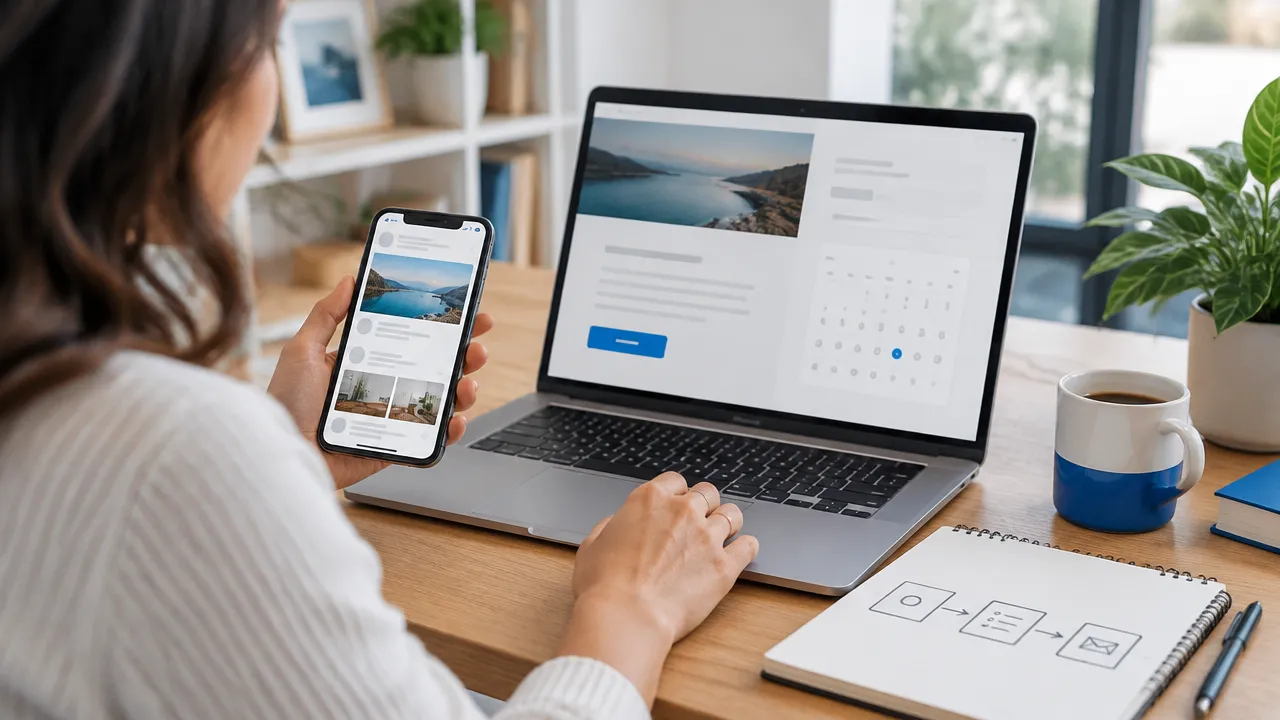
Repeat the test whenever you change a link, offer, page, form, or scheduling tool. A brief review can catch a broken handoff before more people encounter it.
Connect the strategy, creative, and website experience
When social content, landing pages, and scheduling tools are managed separately, small inconsistencies can accumulate. One team may change the offer while another updates the page later, leaving visitors with conflicting information or an outdated destination.
Strattz helps businesses connect social media, paid campaigns, creative, and website experiences around a clear customer journey. The aim is to make each step support the same business goal, from the first post through the inquiry and follow-up. That gives local businesses a more coherent system to manage and improve over time.
Frequently asked questions
What does lead generation mean in digital marketing?
Lead generation in digital marketing is the process of attracting potential customers and giving them a clear way to express interest, such as submitting a form, messaging a business, or booking a call. Social content starts the conversation; a connected next step helps turn attention into a contact your team can follow up with.
What is the biggest mistake in social media lead generation?
The biggest mistake is sending interested people to a page that does not match the offer in the post. Visitors may not know whether they are in the right place, what to do next, or how long the process will take. Keep the promise, wording, and next step consistent from post through follow-up.
Which social media platform is best for generating leads?
The best platform is the one your potential customers use and your business can support consistently. A visually driven local service might get inquiries from Instagram or Facebook, while a B2B company may prioritize LinkedIn. Compare qualified inquiries and booked conversations, not just reach or follower counts, before shifting your budget.
How can a small business start generating leads from social media?
Start with one audience, one useful offer, and one clear next step. Create a post that explains the offer, link it to a matching mobile-friendly page, and ask only for details needed to respond. Test the full journey yourself, then track inquiries and booked calls so you can improve the weakest step.
Do you need a website to generate leads from social media?
No, but a website is useful when prospects need more detail before contacting you. Social platforms can collect inquiries through native forms or messages, while a focused website page can explain an offer and support scheduling. Choose the route that makes the next step easiest for your audience, then measure lead quality and follow-through.