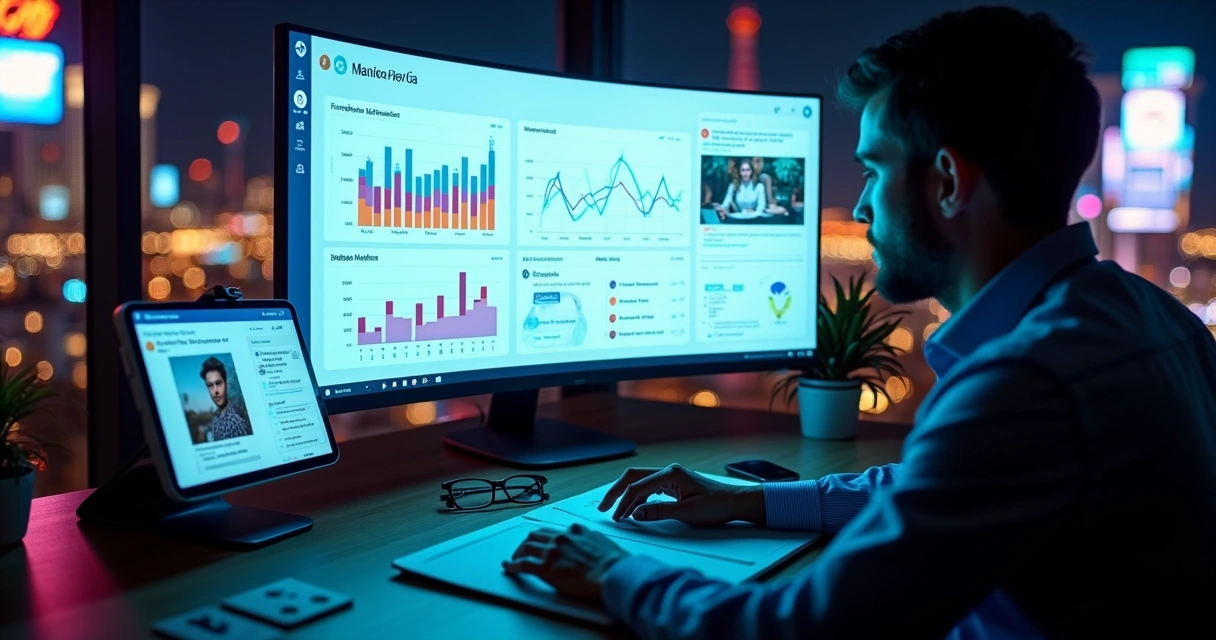
In all my years advising businesses, I keep seeing the same question: How can I turn more locals into loyal customers and grow my revenue with predictability—without burning cash or time? The answer always circles back to one concept: building and operating a practical, adaptable sales funnel, or as many call it, a Funil de Vendas.
I wrote this guide to help you—whether you run a B2B service, a bustling retail shop, or a local e-commerce platform—to understand, apply, and scale a workable funnel that fits the way Las Vegas (and much of the world) does local business. Throughout, I’ll weave in my first-hand perspective, simple steps, examples, digital tools, and actionable tips—no jargon, just what works.
What is a sales funnel and why does it matter for local businesses?
Before anyone sees a boost in sales or more foot traffic, there must be a pathway guiding each potential customer from “I’ve never heard of you” to “Take my payment, I’m in.” That pathway is the funnel.
A Funil de Vendas transforms strangers into paying promoters—step by step.
The funnel breaks down the customer journey into clear stages. Each step meets the prospect where they are. This stepwise flow does not just help big companies. In my experience, it’s even more powerful for local businesses because you can focus your efforts, use targeted messaging, and build strong relationships in your direct market.
When applied right, a sales funnel:
- Attracts the right attention
- Keeps interested people engaged and informed
- Makes it much easier for the right buyers to say “yes”
- Turns happy customers into eager referrers
As I’ve seen time and again at Strattz, even the smallest local brand can use this system to punch above its weight—accelerating growth, lowering acquisition costs, and building brand value that lasts.
Breaking down the funnel: stages and actions that work locally
There’s a common three-stage funnel framework you’ve likely heard about: Awareness, Consideration, and Conversion. Some models add Retention and Advocacy, but for most local businesses, the classic three provide a clear, usable structure.
Stage 1: Awareness—winning attention in your backyard
The first stage is simply getting noticed. You need people in your local market to know you exist and what you offer. In my work with Strattz, I see local brands struggle most with this first hurdle because they lack clear, repeatable actions at the awareness stage.
Practical awareness-building actions for local businesses include:
- Running geo-targeted social media campaigns that match your business vibe
- Optimizing your Google Business Profile and local directories with up-to-date info and photos
- Collaborating with local influencers or micro-influencers popular in your neighborhood
- Attending or sponsoring community events, then sharing authentic recaps on your platforms
- Producing short, local-specific videos showing what makes you different
The result? Locals start talking. Search rankings start climbing. Walk-ins or direct messages increase.
 If you want to see examples of how businesses make noise in their community, one good place to find strategies, mainly in Portuguese, is this blog post about successful branding actions.
Stage 2: Consideration—turning attention into engagement
Let’s assume people now know you exist. But awareness alone is not enough—they have to care.
Here, your job is to educate, build trust, and show prospects why you are the best fit for their needs. In my work, I’ve seen consideration efforts separate thriving businesses from those who stay stuck as “just another option.”
Concrete examples of “consideration” steps:
- Publishing comparison guides for your local service (e.g., “How our café sources coffee differently from other Las Vegas spots”)
- Offering a free sample, demo, or consultation to remove risk for first-time buyers
- Using email nurture sequences that share helpful tips, answer objections, and highlight testimonials
- Elevating your reviews on Google, Facebook, and local platforms by proactively inviting happy customers to post
- Staying responsive and personal in DMs or WhatsApp chats—especially for high-ticket local services
I always suggest pairing these actions with measurement: see which content gets engagement and which offers get sign-ups. Local marketing should never be guesswork.
Turning interest into intent requires trust and relevance at every step.
 More tips on customer engagement and actionable storytelling in your funnel can be found at this guide on motion graphics and content strategies.
Stage 3: Conversion—making the sale simple and satisfying
I’ve learned over time that many businesses lose buyers at the finish line due to confusion, friction, or lack of confidence. Your conversion stage should “grease the wheels” and make taking action easy.
Some proven conversion techniques for local prospects:
- Clear and straightforward “Book Now,” “Order Online,” or “Visit Us” buttons on every channel
- Friction-free checkout, whether online or in-person, and immediate confirmation or follow-up
- Personalized thank-you messages—bonus points if you address them by name or include a relevant referral bonus
- Strong, locally relevant guarantees, such as “satisfaction or your money back” in the buyer’s language or dialect
- Making sure your team is trained to spot buyer hesitation and address questions on the spot
Conversions are not always about price. In my research and through Strattz’s analytics reports, the biggest leaps in conversions often come from improvements in clarity and local authenticity.
If people are ready, do not make them wait—deliver, confirm, and delight fast.
Aligning your funnel to the real customer journey in your city
One truth from my years working with businesses in Las Vegas and similar markets: The funnel that works in one city may not work in another.
To create a funnel that matches your true customer journey, I recommend asking:
- Where do locals start their search for your type of offering? (Google, Instagram, street signs, word-of-mouth, etc.)
- What doubts or concerns stop buyers in your area from acting?
- How much do reviews, referrals, or in-person visits matter to your audience?
- Are there language, cultural, or payment method preferences that you must respect?
When Strattz maps these journey steps with clients, the resulting funnel feels less like a rigid corporate process and more like an extension of how locals buy and share. I always see better results this way—higher conversion rates, lower churn, and more referrals.
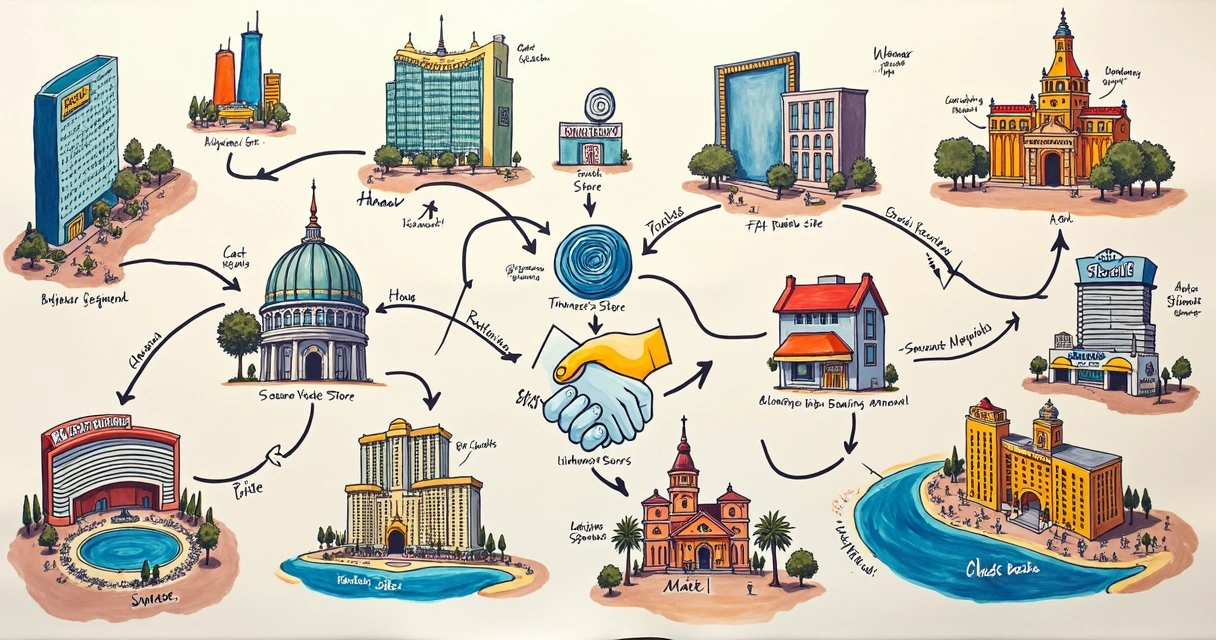 You can check out an in-depth post that discusses aligning your offers with real-life customer experiences here.
The role of CRM tools: managing leads and tracking performance
If I could give only one piece of advice for anyone running a sales funnel in today’s world, it would be this: Organize and track every lead, conversation, and sale with a CRM.
For local businesses, a CRM does not have to be complex or expensive. But relying on sticky notes or a messy inbox means lost money and missed relationships. I’ve seen businesses of all sizes make the jump from scattered contacts to a simple tool—and instantly get clearer pipelines, faster follow-ups, and fewer missed opportunities.
Look for a CRM that:
- Lets you quickly enter lead details and notes after every call or walk-in
- Shows exactly what stage each new or returning buyer is in (aware, considering, ready, followed-up, etc.)
- Automates reminders for follow-up, especially for high-value or repeat buyers
- Integrates with your website, Facebook/Instagram messages, and email campaigns
- Provides simple dashboards with numbers you can understand at a glance
With Strattz clients, I also encourage regular pipeline reviews. Did someone linger too long in consideration? Did too many aware locals never receive a reply? The best CRMs help answer these crucial questions.
A clean pipeline gives you peace of mind and helps you win more sales with less stress.
Marketing automation: nurturing leads without losing the local touch
When people hear “automation,” they imagine faceless, robotic outreach. But good local automation is personal, timely, and respectful of your unique market.
Here are methods I recommend to keep the flavor of your brand alive:
- Schedule friendly, branded email drips that share stories and invite conversation—not just promos
- Set up text or WhatsApp reminders for appointments or time-limited offers
- Use chatbots only for clear, common questions—then hand off quickly to a real person for trickier issues
- Automate local event updates, review requests, or birthday wishes to stay top-of-mind
- Personalize every message with local slang (when appropriate) and neighborhood references
 The difference is profound. Automated systems create consistency, save precious time, but must never feel spammy or out of place in your community’s conversation. That’s something we always reinforce at Strattz.
Content strategy inside the funnel: informing, convincing, and closing
Content, in my experience, is the engine of every effective funnel. Each stage calls for different content types and approaches. What works best for B2B won’t always fit B2C. Your job is to match format, message, and timing to your specific local audience and funnel stage.
Here’s how I approach this, step by step:
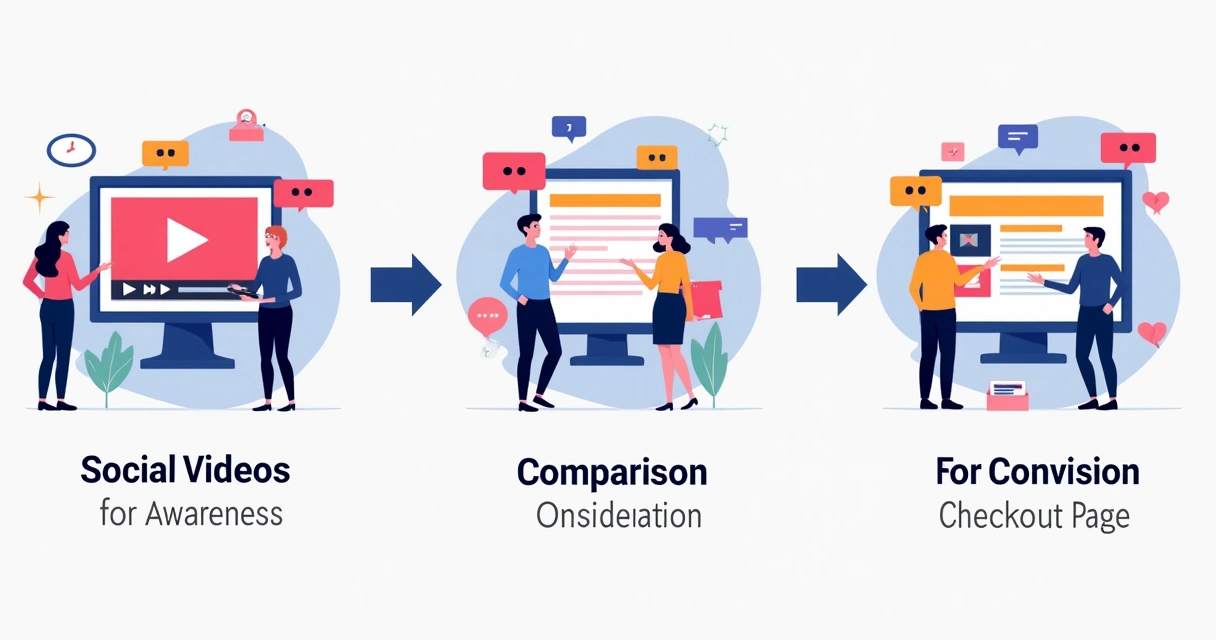
- Attract with short-form videos, quick tips, local stories, or highlight reels on Instagram, TikTok, and Facebook.
- Nurture with comparison sheets, FAQ blog posts, testimonials, case studies, or interactive quizzes.
- Convert with strong, high-converting web pages, a FAQ that answers objections, clear case-study proof, and on-page trust signals (like badges, partners, or awards).
Pair each funnel stage with content that matches customer mood, doubts, and sense of urgency.
 I often refer clients and readers to a range of practical breakdowns on content, like what you’ll find at the Strattz main blog.
Examples tailored for B2B, B2C, and local e-commerce
Every type of business demands a nuanced funnel. Based on what I’ve observed both locally in Las Vegas and in research, here’s how the steps differ.
B2B local services (like IT, repair, or consulting)
- Awareness: Network at industry meetups; partner with chamber of commerce events; publish case studies of local businesses helped
- Consideration: Offer free audits or consultations; send solution breakdowns specific to local challenges; nurture with targeted LinkedIn messages or emails
- Conversion: Present a clear, concise contract with local references; follow up fast; offer onboarding help to ensure smooth handover
B2C physical stores or service providers (cafés, wellness, salons, repair shops)
- Awareness: Sponsor kids’ sports teams or community drives; optimize your Google Business Profile with location-rich content; run local Instagram contests
- Consideration: Share behind-the-scenes stories; offer first-time buyer discounts; hand out feedback cards after visits
- Conversion: Provide fast checkout; reward program signups at point-of-sale; send invitation to return by text or email
Local e-commerce (physical goods, local delivery)
- Awareness: Partner with neighborhood bloggers; run geo-based ad campaigns; create “why shop local” carousel ads
- Consideration: Compare your delivery terms, returns, and support against big-box alternatives; show real customer photos and reviews
- Conversion: Easy one-click ordering; free local returns or pickup; bonus for referring a friend in the same city
Measuring what matters: performance metrics for every stage
No funnel should run blind. I encourage every local business owner to track basic metrics at every stage, review them often, and act on the signals. Here are a few simple KPIs to consider:
- Reach/impressions on social posts (are you being seen?)
- Website visitors and click-through rates (is your audience engaged?)
- Lead sign-ups, demo bookings, or calls scheduled (are people showing intent?)
- Conversion rates at checkout or appointment made (do prospects finish the journey?)
- Review volume, repeat customers, and referrals (do clients return and recommend?)
It is not about having fancy dashboards, but about having enough data to spot what works and fix what is stuck.
If you can measure it, you can move it.
Finding and fixing bottlenecks in your funnel
Almost every business at some point thinks, “why aren’t more leads buying?” Bottlenecks pop up for many reasons: poor follow-up, generic content, clunky checkout, or lack of trust signals. The trick is to spot and fix them without delay.
Here’s how I guide businesses to address bottlenecks in the funnel:
- Review your metrics: Big drop-off between stages? That is often where the issue lies.
- Test with real users: Ask recent buyers (or people who did not buy) for feedback about what confused, annoyed, or worried them.
- Check your messaging: See if each stage’s content directly answers that specific audience’s top concern at that moment.
- Simplify the action: Cut extra steps, unclear language, or slow pages. One less click is one less chance to lose them.
- Repeat and check: Once fixed, check your new numbers. Continuous improvement is the goal.
Strattz’s experience in social media campaigns shows most bottlenecks arise from skipped follow-ups and unfocused local messaging. Adjust quickly, and you’ll see the difference.
 Ongoing refinement: why testing, reviews, and collaboration matter
 Ongoing refinement: why testing, reviews, and collaboration matter
I’ve never seen a funnel “just work” forever. Markets shift, competitors change, and customer habits evolve. Here’s my regular process:
- Run simple A/B tests—even small changes to headlines or button color can boost results
- Review funnel steps every quarter—what’s trending in local reviews, what questions are popping up?
- Survey buyers who just finished (or abandoned) the process
- Encourage regular meetings between your marketing and sales (or front-of-line) teams to share what’s being heard “on the ground”
- Keep a short list of “what to improve next” based on feedback and numbers
This approach means you’ll find quick wins and avoid growing stale. As the U.S. Department of Commerce points out, having on-the-ground market insight is powerful—not just for distribution, but for tuning your funnel and keeping pace with the local community’s rhythm. For more insight, especially about how contract terms or agent relationships affect local businesses, check their official guidance.
A funnel is never finished—it’s a living system that should grow with your business.
Digital tools and trends: choosing what fits your funnel and market
The digital landscape for local marketing changes rapidly, but I find some tools and tactics consistently help local funnels run smoother:
- Social ad platforms (like Facebook ads, Instagram, Google Ads): Use radius or zip code targeting to reach only local buyers.
- Google Business Profile: Keep details and photos current; post weekly updates to climb local search results.
- Messenger bots and automation tools: Good for quick replies, but best paired with real human backup.
- Email and SMS solutions: Make sure opt-in/out is simple and all content is “local first.”
- Analytics dashboards: Even Google Analytics or basic CRM reporting is enough at first—just track the top metrics and review monthly.
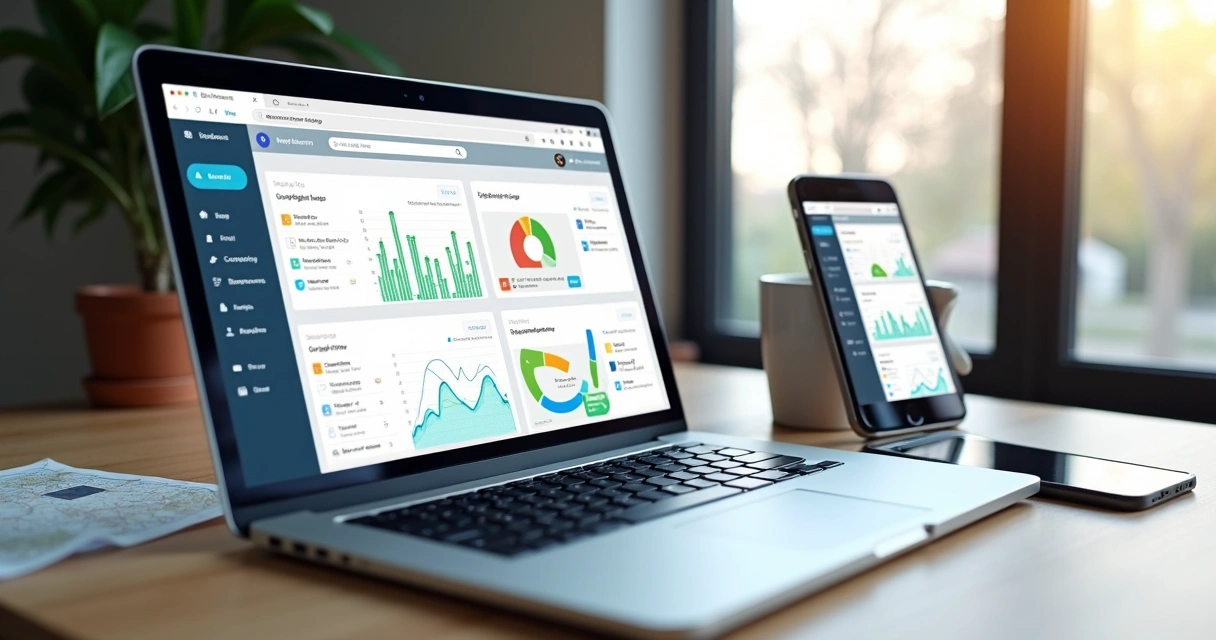 Strattz specializes in helping businesses not just pick tools, but actually use them day-to-day—from setting up campaigns to reading the data. If you want a deeper digital marketing breakdown, check the profile at Strattz author profile.
Local tips: what sets your funnel apart in your community
After many years consulting for varied industries in Las Vegas, I’ve collected practical tips that consistently create equity in local funnels:
- Humanize your communication. Even automated steps should feel like they’re from a neighbor next door.
- Collect and showcase hyper-local testimonials. Names, faces, and neighborhoods your audience knows carry extra weight.
- Offer incentives tied to local causes. Give a portion to a city sports club or school, and promote it in your funnel.
- Monitor local groups and hashtags. Engage in neighborhood discussions, not just “market” at people.
- Reward referrals that create a network effect. Turn one loyal buyer into three by making “bring a friend” truly simple and rewarding.
- Show your team’s real faces in content. People buy from familiar faces, not faceless companies.
As customers increasingly seek personal, trustworthy companies, these local-first approaches outshine distant, generic ones.
Key takeaways: building a working funnel for local success
To bring it all together, here are my main recommendations for putting effective Funil de Vendas systems to work for your business:
- Start simple, but map each funnel stage clearly. Awareness, engagement, and conversion should be distinct steps with their own actions and goals.
- Tune every step to your community’s habits and preferences, not copy-pasted global templates.
- Track the funnel as it flows. Use a CRM, automate where helpful, and always seek real feedback.
- Pair the right content with the right stage. Think of it as a conversation, not a lecture.
- Test new approaches, adjust often, and ask your customers what they wish was easier.
- Fix what stalls the flow. Sometimes even tiny tweaks unblock a flood of new sales.
- Stay human, local, and consistent. Your brand becomes more valuable with every positive neighborhood interaction.
Conclusion: your next step to sales growth with Strattz
If you take nothing else from this guide, remember this: A working sales funnel puts you in control of your growth—stage by stage, in your market. The steps are not complicated, but they require focus, regular updates, and smart digital tools that match your unique city and industry.
I’ve seen firsthand how brands working with Strattz’s team transform their sales, reputation, and day-to-day energy by applying these principles. If you’re ready to make your customer journey smoother, your revenue steadier, and your marketing clearer—explore more about our approach and book a free consult. Let’s build a funnel that grows with your business, not against it.
Frequently asked questions
What is a sales funnel for local businesses?
A sales funnel for local businesses is a step-by-step process that guides prospects from discovering your brand to becoming repeat customers, using targeted content and actions at each stage. It’s especially effective in local markets because it accounts for personal habits, regional buying patterns, and community trust.
How do I create a sales funnel?
You create a sales funnel by mapping out your customer journey, defining actions and touchpoints for awareness, consideration, and conversion, and then using tools like CRM software and digital marketing to move leads through each step intentionally. Adjust your actions and content at every stage based on what your local community responds to.
Is a sales funnel worth it for small businesses?
Yes, sales funnels deliver clear benefits for small businesses by focusing marketing, automating follow-up, and ensuring no lead gets lost in the rush of day-to-day work. It also helps small businesses compete with larger ones by building strong, personal connections with their most profitable buyers.
What are the stages of a sales funnel?
The main stages of a sales funnel are awareness (attracting attention), consideration (building trust and interest), and conversion (closing the deal or making the sale). Some businesses also add post-sale stages like retention and advocacy, but for most local businesses, the core three are enough to start.
How can a funnel increase my local sales?
A sales funnel increases local sales by moving prospects purposefully from “just looking” to “buying and recommending,” using the right messages and incentives at the right moment in their journey. This structure also helps you spot where people drop out and fix those gaps for steady sales growth.