Many small businesses I’ve met start out posting online with high hopes. Day after day, they put up photos or messages with the intention of winning new clients. After months of effort, they begin to sense a problem: nobody seems to notice. The likes come in dribbles. Few, if any, ask questions. Sales? Barely changed. If you’ve ever asked yourself, “Is all this work actually getting me anywhere?”—you are not alone.
I think the root problem is usually the same. Most businesses don’t have a clear plan for how their online presence turns strangers into customers. They’re posting without a real digital funnel. Just posting content isn’t marketing; it’s a distraction if you can’t show how those posts move someone closer to buying or booking your services.
Why posting without a plan feels so disappointing
I’ve seen firsthand how time-consuming it is to make regular posts. The camera comes out. Edits happen. Some days, you squeeze in something quick. Some days, you go big. But if all these posts look the same and have no journey, most viewers will lose interest quickly. People need direction before they become customers. That direction is what a digital funnel provides.
Build a path, not just noise.
Imagine you’re at a street fair. Do you walk up to a random booth and buy immediately? Or do you look, consider, get more information, maybe a free taste, and then decide? Online customers act the same way. If there’s no plan, posting feels almost random, with each piece forgotten as soon as it’s published.
What is a digital funnel?
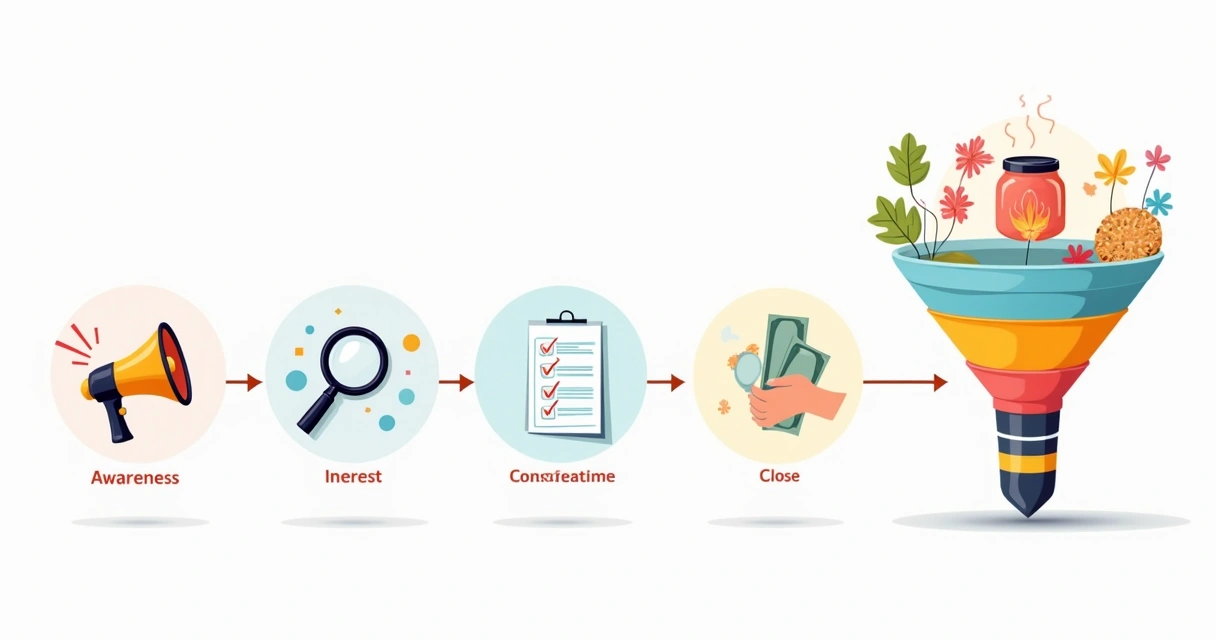
A digital funnel is a simple, step-by-step plan that guides someone from first hearing about your business all the way to making a purchase. The funnel works by moving people through a few clear stages. At each stage, your actions and content have a different purpose. Many local and small businesses never set these steps, so people don’t know what to do next.
- First, create awareness: Let people see you exist.
- Second, build interest: Share what makes you helpful or special.
- Third, encourage consideration: Answer questions and show proof.
- Fourth, support the decision: Make it easy to buy or book.
- Fifth, close the deal: Help them complete the action, and thank them.
 Breaking down the funnel: steps and actions
 Breaking down the funnel: steps and actions
I want to make this clear for those of you who sometimes feel lost with marketing language. Each funnel stage matches a different type of action. This isn’t just theory. I’ve seen these steps in action every day at Strattz, and they work for all kinds of local businesses.
Step 1: Building awareness
This is where you simply show up. The goal is to let potential customers know you exist. This doesn’t mean selling yet. Think of it like waving hello to your neighborhood.
- Introduce your business and what you do.
- Share photos of your shop, team, or products in daily use.
- Join local events or trends to get noticed.
At this stage, I suggest businesses aim for visibility, not pushing sales. Those who don’t know you can’t buy from you. Good awareness content creates that first connection.
Step 2: Sparking interest
After saying hello, now it’s time to give viewers a reason to care. This is where you show how you help or what makes your offer different.
- Share before-and-after photos of your work.
- Post quick explainer videos about common problems you solve.
- Show happy customers using your product or service.
Interest grows when your audience sees relatable results or solutions.
Step 3: Getting them to consider
 Step 3: Getting them to consider
This is the stage where viewers weigh whether to choose you. Your job is to give assurance. Make it easy for them to understand why you’re a trustworthy choice.
- Share testimonials from past clients.
- Display clear pricing, menus, or service lists.
- Answer common questions openly.
- Show a behind-the-scenes view to create trust.
Content here needs more detail, proof, and openness. Don’t rush things; decision-making is not instant for most people.
Step 4: Supporting the decision
Now it’s about making it as easy as possible for ready-to-buy people to take action. Remove extra steps, simplify booking, or offer clearer directions to your location. Give a reason to act now (without shouting about sales).
- Share limited offers or booking windows.
- Highlight an easy call-to-action (“Message us to schedule” or “See our menu online”).
- Direct them to your website for quick purchase or reservation.
Every barrier removed at this stage increases your chance to close more customers.
Step 5: Closing the deal and after
Once someone buys or books, your content shouldn’t stop. Thank them, request feedback, or suggest how they can get the most value out of your services.
- Send thank you messages or follow-up emails.
- Post-shared stories about customer experiences.
- Offer a small bonus for referrals.
I’ve found this last step turns one-time buyers into repeat clients and fans. It’s the difference between a single sale and a relationship.
Simple steps to build your own funnel (and stick to it)
This may sound like a lot, but you don’t have to create all the content at once. Here’s what I suggest for anyone feeling stuck:
- Map the main stages of your customer journey on paper. Use awareness, interest, consideration, decision, and closing.
- List two actions or specific content types that match each stage. This could be a post, a video, or a simple photo.
- Choose a single goal for each stage. For example, “In awareness, my goal is to get our name seen by 500 locals this month.”
- Use a basic calendar. Assign one piece of content to each stage every week. This stops you from posting the same thing over and over.
- Track what gets interest or clicks. Adjust your actions, but stick to the plan for at least a month before making big changes.
With the right structure, your posting shifts from random to intentional. Each post has a purpose, and you spend less time thinking, “What should I write today?”
Why your mindset matters most
It’s normal to feel impatient. You might think, “I posted three times last week and nothing happened.” But every step in the funnel builds on the last. Awareness brings eyes. Interest brings questions. Consideration builds trust. Sales come at the end—slowly, then all at once.
Every customer starts out not knowing you exist.
The confidence I see in business owners grows the moment they realize their actions are working together, not fighting for attention. This is a process that every local brand, from coffee shops to hair salons to creative studios, can apply.
How Strattz helps you create a structured funnel
At Strattz, we help businesses in Las Vegas and beyond create their own plan—one that matches their audience and makes online efforts count. I’ve had clients who, after following clear funnel steps, saw a complete turnaround in their local engagement. Suddenly, their inbox had real leads, not just likes. If you want to see examples of this approach, you might like reading the results of a case study or this step-by-step content breakdown from our projects. Following a funnel doesn’t require tech skills or big budgets. It needs patience and a smart plan.
Conclusion: Make your efforts mean something
In my experience, random posting creates random results. Smart, consistent actions—anchored by a real digital funnel—create growth that you can see and feel. If you’re ready to move from just posting to actually building, start by mapping your customer’s journey. Then match your actions to each step. Your business deserves more than guesswork. Give your effort the structure it needs.
Want to learn more practical tips for growing your business online? Take a look at our other articles by Strattz, check out our full list of contributors, or use the search feature to find topics specific to your needs. I’d love to help you move forward with real results.
Frequently asked questions
What is a digital marketing funnel?
A digital marketing funnel is a sequence of planned steps that guide someone from discovering your business to becoming a customer. Each step has a unique goal, such as building awareness, sparking interest, supporting consideration, making the decision process easy, and closing the deal. The funnel helps you focus on the right actions at the right time rather than just posting randomly.
How do I create a posting plan?
Start by outlining the journey your customer takes. Write down each stage: awareness, interest, consideration, decision, closing. Assign at least two different content types or actions to each stage—like sharing a client review or posting a behind-the-scenes story. Then, use a simple calendar to make sure you spread these actions out. This structure keeps your content balanced and effective.
Why is posting without a plan bad?
Posting without a plan means most of your hard work gets ignored because it does not move people closer to buying from you. It creates lots of noise, but doesn’t guide your audience. Without a funnel, it’s very hard to know if your time is having any real effect on your sales or customer growth.
What are the steps for a digital funnel?
The common steps are:
- Awareness (make customers know you exist)
- Interest (showcase what you offer and why it matters)
- Consideration (build trust and answer questions)
- Decision (make the next step easy, like booking or buying)
- Closing (support customers after the sale)
Each step should have specific content and actions connected to its goal.
How can I measure funnel success?
Measure success in your funnel by tracking simple numbers at every stage, like reach or views (awareness), messages or clicks (interest), questions or requests (consideration), completed bookings or sales (decision), and repeat purchases (closing). Checking these helps you see where you lose people and what works best, so you can improve your funnel over time.